
June 22, 2026 By LimoFahr
If you travel regularly for work, you have probably weighed the options: book a chauffeur, open Uber, or find a taxi rank. On the surface, the choice looks simple. But the actual cost of each option for business travel goes well beyond the base fare.
This guide breaks down what each service really costs in 2026, where the hidden charges appear, and why many corporate travelers are rethinking their ground transportation choices.
Before comparing costs, it helps to understand what each service actually provides.
A chauffeur service is a pre-booked, professional transportation option. You receive a fixed price before the trip begins. The driver monitors your flight, waits within a standard window if you are delayed, and meets you at the arrivals hall with a name board. Vehicles are typically executive sedans, premium SUVs, or business vans maintained to a consistent standard.
Uber connects you with a nearby driver through a mobile app. Pricing is dynamic. It changes based on demand, time of day, local traffic, and events in the area. There is no fixed price guarantee, and vehicle quality varies by driver.
Taxis operate on metered fares set by local transport authorities. You can find them at designated ranks or hail them on the street. In most cities, base rates are regulated and surge pricing does not apply. However, airport taxis often carry additional charges: access fees, luggage supplements, and toll costs.
The most significant cost difference between a chauffeur service and a rideshare comes down to how pricing works.
With Uber or a taxi, the final fare is rarely 100% predictable. Traffic delays, route diversions, and demand spikes all affect what you pay. With a chauffeur service, you receive a confirmed quote before the trip starts. That price covers the full transfer, including meet and greet, standard waiting time, and luggage assistance. There are no adjustments at the end.
For business travelers who need accurate, auditable expense reports, this distinction matters.
Surge pricing is one of the most discussed issues in corporate ground transport. Uber's algorithm activates higher fares when demand exceeds available drivers in a given area. This can happen during early morning airport runs, peak conference periods, bad weather, and post-event traffic.
During these windows, fares can increase significantly from the standard rate. For a traveler catching a 6 AM flight or leaving a conference venue alongside hundreds of other attendees, this is not a theoretical risk. It is a real, recurring cost.
According to Uber's 2024 annual data, the platform completed 11.3 billion trips globally in 2024, reflecting how deeply embedded rideshare has become in business travel. The volume, however, also means that demand spikes are frequent and often unpredictable.
Taxis avoid dynamic pricing in most markets, since local authorities regulate their meters. But airport taxi queues are long during busy periods, and supplemental airport charges apply in most major cities.
A chauffeur service eliminates this variable entirely. The rate you see at booking is the rate you pay, regardless of demand conditions on the day.
To make this practical, consider a standard airport transfer: a city center hotel to an international airport, covering a journey of 30 to 45 minutes.
|
Service |
Pricing Structure |
Surge Risk |
Wait Time Policy |
Extras |
|
Chauffeur Service |
Fixed, confirmed at booking |
None |
Flight tracked, wait included |
Meet and greet, luggage help |
|
Uber (standard) |
Dynamic, estimated |
High during peak periods |
Driver may cancel |
None standard |
|
Taxi |
Metered, regulated |
Low to none |
No adjustment for delays |
Airport access fee, toll costs |
The total cost gap between a chauffeur and Uber is often smaller than travelers assume, particularly when surge pricing is active. For airport transfers in major European and Asian cities, a chauffeur service frequently compares well against a surged rideshare fare, while offering a substantially better experience.
Cost is one factor. But for frequent corporate travelers, it is rarely the only consideration.
Missing a flight or arriving late to a client meeting carries a real cost that does not appear on any expense report. A professional chauffeur service monitors your flight in real time. If your plane lands early or is delayed, the driver adjusts accordingly. You do not need to call ahead or update a booking manually.
Uber does not offer flight tracking. If you land late and no driver is nearby, you wait.
Taxis require you to judge timing yourself. If your flight is delayed by 90 minutes, finding a taxi at the rank is your responsibility.
Many executives use travel time to prepare for meetings, review documents, or take calls. A dedicated chauffeur vehicle provides a quiet, private environment to do this comfortably.
Uber quality varies significantly by driver and vehicle. Noise levels, conversation, and in-car conditions are harder to control. For a 45-minute airport run before a client presentation, this matters.
For client-facing or VIP travel, the vehicle you arrive in makes an impression. An executive sedan or premium SUV with a uniformed chauffeur signals preparation and professionalism. Arriving in a standard rideshare does not always align with that expectation, particularly for senior executives or high-value client meetings.
Fixed pricing makes expense reporting straightforward for both the traveler and the finance team. Many corporate chauffeur providers offer direct invoicing, itemized receipts per trip, and monthly account statements that integrate with travel management systems.
According to GBTA research on ground transportation trends, 93% of business travelers want a single integrated platform to manage their ground transport and related expenses. Predictable, documented costs are central to that expectation.
With Uber for Business, companies can apply some spending controls at the account level. However, surge pricing still applies, and total costs for the same route can vary widely week to week.
Flight monitoring is standard practice for professional chauffeur providers. The driver knows your flight number, tracks its status, and adjusts arrival time accordingly. Standard waiting time (typically 60 minutes after landing for international arrivals) is included in the quoted price.
This is particularly useful when your itinerary is tight or when arriving at a busy hub like Heathrow, Frankfurt, or Dubai International. You exit arrivals, see your name board, and proceed directly to the vehicle without searching for an available Uber or joining a taxi queue.
Chauffeur fleets typically include:
● Executive sedans (Mercedes E-Class, BMW 5 Series, Audi A6)
● Business vans and MPVs for group transfers
● Premium SUVs for VIP or family travel
● Luxury vehicles for high-profile clients
Vehicles are maintained to a consistent standard and driven by professional chauffeurs who are vetted, insured, and trained in client service.
Not every trip requires a chauffeur service. Here is a practical guide for choosing the right option:
Choose a chauffeur service when:
● You need a reliable airport transfer with flight monitoring
● You are attending an important client meeting or corporate event
● Your company requires itemized expense records
● You are transporting a VIP, executive, or group
● You need consistent vehicle quality and a professional experience
Uber works well when:
● You need a short, unplanned trip within a city
● Timing is flexible and surge pricing is not a concern at that moment
● You are traveling solo with minimal luggage on a casual trip
A taxi is a practical choice when:
● You are in a city with a well-regulated, reliable taxi network
● You prefer metered fares with no app or account required
● You are not under time pressure at the airport
For corporate travelers who value punctuality, privacy, and predictable costs, a fixed-rate chauffeur service often delivers better overall value than a variable-priced alternative, especially when the full picture of surge pricing, airport supplements, and time lost to delays is factored in.
If your next business trip requires a reliable airport transfer or executive transportation, explore LimoFahr's private chauffeur options. Get a fixed-rate quote today before your next journey.
Not always. For airport transfers, a fixed-rate chauffeur service is often comparable to, or sometimes lower than, an Uber during periods of surge pricing. The key difference is certainty: a chauffeur rate is agreed at the time of booking and does not change based on demand. An Uber fare can rise significantly at peak hours or during local events.
Corporate travelers prioritize reliability, privacy, and consistent service quality. A chauffeur service offers fixed pricing, flight tracking, professional vehicles, direct invoicing, and a meet and greet service at arrivals. These features make business travel easier to plan, manage, and report on. Uber offers flexibility for casual trips but lacks the consistency required for high-stakes corporate travel.
Yes, in most cases. Chauffeur service providers issue itemized invoices and receipts that meet standard corporate expense requirements. Always confirm with your company travel policy and consult your local tax authority guidelines for deductible business travel expenses.
Most professional chauffeur services operate executive sedans, premium SUVs, business vans, and luxury vehicles. The specific fleet depends on the provider. LimoFahr offers a range of vehicles for solo business travelers, corporate groups, and VIP transfers across multiple cities.
Uber can be booked a few minutes before you need it. A chauffeur service is best reserved at least 24 hours in advance, and earlier for important trips or peak travel periods. Advance booking confirms your vehicle, locks in your price, and gives the provider time to set up flight monitoring and meet and greet arrangements.
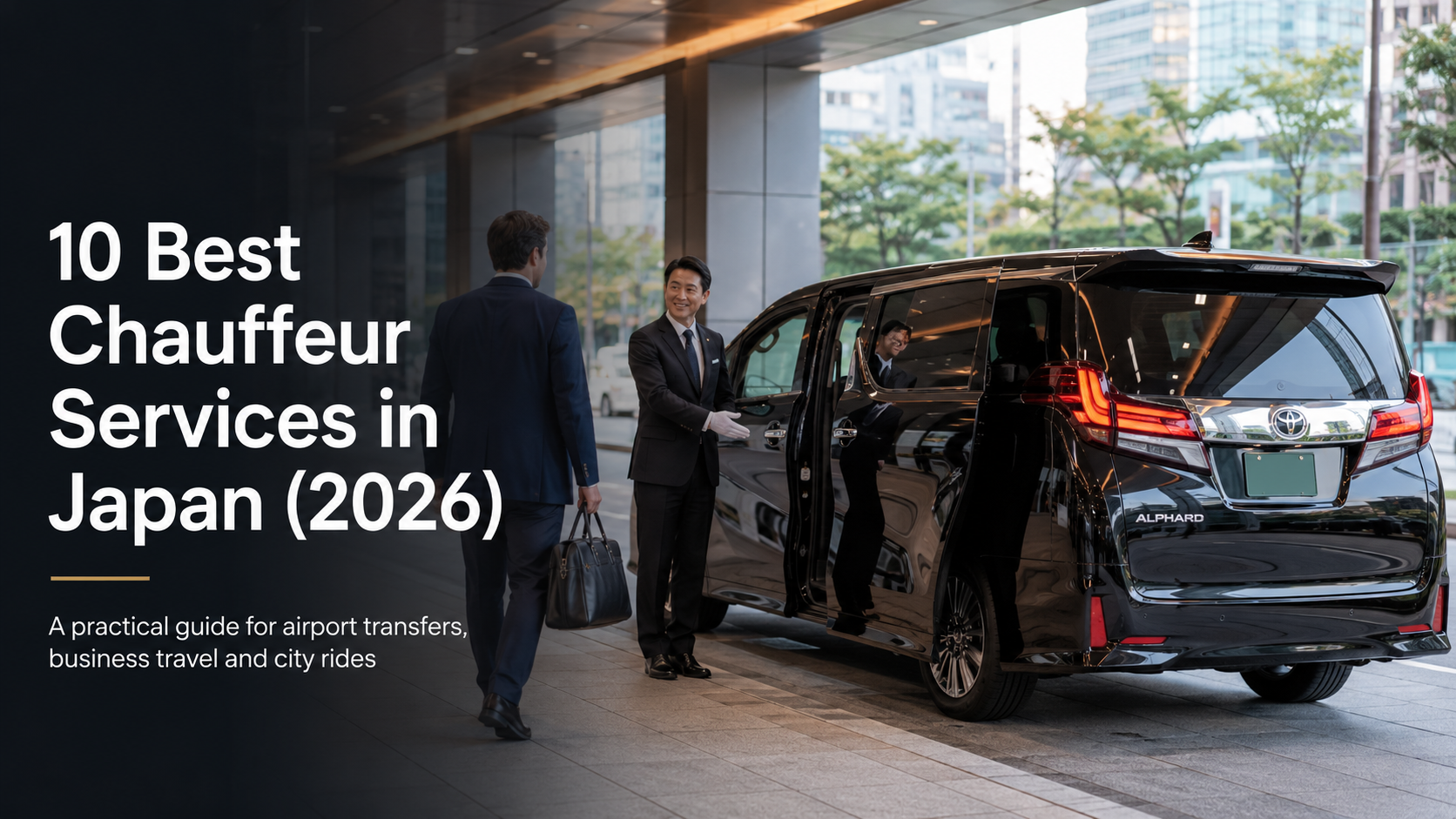
August 13, 2026 By LimoFahr
Japan is one of the world's most rewarding destinations for business and leisure travel. It is also one of the most rewarding for ground transport. Trains are excellent, punctuality is a cultural standard, and the service quality of professional chau...
READ MORE
August 05, 2026 By LimoFahr
Germany has two airports that regularly compete for the title of the country's premier international aviation hub. Frankfurt Airport (IATA: FRA) and Munich Airport (IATA: MUC) both serve as major Lufthansa bases, both offer extensive intercontinental...
READ MOREguide2026.png "Oslo Airport (OSL) Guide 2026: Terminals, Lounges and Transport")
July 30, 2026 By LimoFahr
Oslo Airport Gardermoen (IATA: OSL) is Norway's main international airport and one of Scandinavia's busiest aviation hubs. Located approximately 47 kilometers north of Oslo city centre, it serves over 27 million passengers per year and connects the N...
READ MORE
July 16, 2026 By LimoFahr
Berlin Brandenburg Airport (IATA: BER) is the main international gateway into Germany's capital, handling millions of passengers each year across two active terminals. Whether you are flying in for a business meeting, transiting through Berlin, or de...
READ MORE
July 03, 2026 By LimoFahr
Traveling alone as a woman takes planning, confidence, and the right choices along the way. One of those choices is how you move between airports, hotels, and destinations, particularly in cities you are visiting for the first time. This guide explai...
READ MORE
June 22, 2026 By LimoFahr
If you travel regularly for work, you have probably weighed the options: book a chauffeur, open Uber, or find a taxi rank. On the surface, the choice looks simple. But the actual cost of each option for business travel goes well beyond the base fare....
READ MORE
August 31, 2026 By LimoFahr

August 24, 2026 By LimoFahr

August 20, 2026 By LimoFahr
August 13, 2026 By LimoFahr
August 05, 2026 By LimoFahr
Hourly bookings have a few rules that passengers should be aware of. When booking a trip on an hourly basis, it typically starts at the time you meet the driver, within the included waiting time. The trip ends in the area of the city where you indicated your pickup point.
For Economy+ or Business booking class, there is an included waiting time of 15 minutes for pickups outside of the airport, and 45 minutes for Economy+ airport pickups, 60 minutes for Business airport pickups. For First Class, the included waiting time is 30 minutes for pickups outside of the airport and 90 minutes for airport pickups. It's worth noting that hourly bookings are only for a certain amount of time and include specified pickup location, toll, and parking fees are not included in the price.
Saves Time! Travelling to new city for business meetings and you need to get there on time. Scheduling or pre-booking a taxi will benefit you in many cases as taxi will be available at the airport as you reach there, you don’t have to stand in queue and hail for taxis. You don’t know if the taxi is safe or not if you are not pre-booking. You can check our service on our website and go through our fleet and choose taxi as per your choice. You can adjust your trip according to yourself!
An airport transfer is a ride from the airport after your plane lands. The company will ask for your flight number during the booking process so the driver can be there at the time of your plane's arrival. Please note that flights are not tracked for rides to the airport. If you need to be dropped off at a specific terminal, please include it in the destination/drop-off address. What if I provide the incorrect flight number and want to change it? You can change the flight number for free in your account until 3 hours before the scheduled pickup time.
For limousine bookings, the driver will typically be holding a pickup sign with your name and surname on it. You can also request specific text to appear on the sign when making your booking. Simply look for the sign upon arrival at the airport.
For Quality Taxi bookings, the details of your car, along with the driver's contact information will be sent to you via SMS before your pickup.
If you have difficulty finding your driver for either type of booking, you can always call them using the mobile number provided in the SMS sent to you by the company.
Well, these services are designed to get you to your destination quickly and comfortably, without having to worry about the stress of driving yourself or dealing with public transportation. We are there to make all the difference while you can care a little less about all the planning. We bet guaranteed satisfaction along with the best chauffeurs who will guide you throughout the journey and offer an explicit helping hand in order to match the level of comfort you desire. Our motto is to meet all customers needs and create an unforgettable experience for them which they can cherish for life. We believe in creating experiences and thus all our staff is very welcoming and friendly, we offer utmost every kind of help and support in order to comfort you while you travel or stay here. You can always trust us with your travel related concerns and connect with our team if need be and we will sort it out for you..
Searching for your ride…
Comparing prices from our partners. This can take a few seconds.