January 31, 2023 By LimoFahr
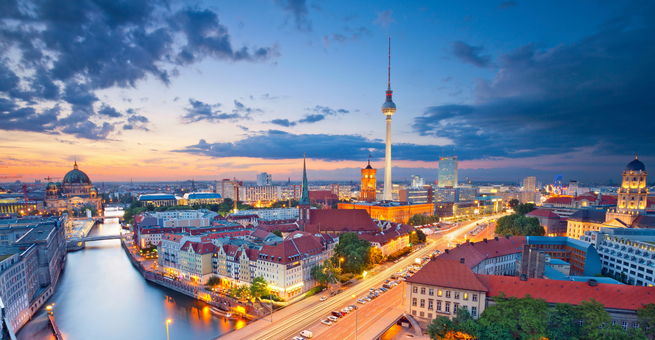
Berlin is one of Europe's most layered cities. It is simultaneously a living history museum, a global arts capital, and one of the continent's most energetic urban environments. Few cities can match its ability to hold the weight of the twentieth century while generating some of the twenty-first's most forward-thinking culture, cuisine, and architecture.
Whether you have two days or two weeks, Berlin rewards exploration. This guide covers the best places to visit in Berlin, organized by type of experience, with practical tips for getting the most from each one.
No visit to Berlin is complete without standing at the Brandenburg Gate. Built in the late eighteenth century as a symbol of Prussian power, it became the defining image of a divided city during the Cold War and the defining image of reunification when the Wall fell in 1989.
Today it stands at the western end of Unter den Linden, Berlin's grand ceremonial boulevard, and is at its most atmospheric early in the morning before crowds gather or at dusk when the sandstone columns catch the last light. The adjacent Pariser Platz is flanked by the embassies of France and the United States, and the nearby Tiergarten park begins immediately to the west.
Practical tip: The Brandenburg Gate is a 10-minute walk from the Holocaust Memorial and a 5-minute walk from the Reichstag. Group these three together for an efficient afternoon.
The Reichstag houses the German Bundestag (parliament) and is one of the most architecturally distinctive buildings in Europe, its nineteenth-century stone facade topped by a soaring glass dome designed by Sir Norman Foster following German reunification.
Visitors can access the rooftop dome and its spiraling internal ramp for free, with panoramic views across central Berlin. Booking is required in advance through the official Bundestag registration system, as places fill weeks ahead during summer and peak periods.
Practical tip: Register for a timeslot on the official Bundestag website at least two to three weeks before your visit. Slots for the dome fill faster than most visitors expect.
Located just south of the Brandenburg Gate, the Holocaust Memorial is one of the most affecting public memorials in the world. Designed by architect Peter Eisenman, it consists of 2,711 concrete stelae of varying heights across a sloping field, creating a disorienting, immersive experience intended to evoke isolation and vulnerability.
An underground information centre beneath the memorial documents individual stories and family histories from across Europe. Allow at least an hour, and approach this site with the time and quietness it deserves.
The East Side Gallery is the longest remaining section of the Berlin Wall still standing: 1.3 kilometers of the original barrier, preserved and transformed into an open-air gallery. More than 100 artists from across the world were invited to paint the eastern-facing side of the Wall in 1990, and the resulting murals range from deeply political to joyfully absurd.
The gallery runs along the west bank of the River Spree in Friedrichshain. The most famous mural is Dmitri Vrubel's painting of Soviet leader Leonid Brezhnev kissing East German leader Erich Honecker, often known as the "fraternal kiss."
Practical tip: Combine the East Side Gallery with a walk south along the Spree to Oberbaum Bridge, one of Berlin's most photographed landmarks.
Checkpoint Charlie was the most famous crossing point between East and West Berlin during the Cold War, used by diplomats, foreign military personnel, and espionage operations from both sides. The original booth is long gone; what remains today is a reconstruction at the original location, surrounded by photographs and exhibits explaining its historical significance.
The adjacent Checkpoint Charlie Museum (Haus am Checkpoint Charlie) documents escape attempts from East Germany, some remarkably ingenious, others tragically unsuccessful. The museum is dense with material and warrants at least two hours.
Museum Island is a UNESCO World Heritage Site and one of the most significant concentrations of museum space in the world. Located on a small island in the River Spree in the heart of the city, it houses five major institutions:
● Pergamon Museum: Home to ancient architectural reconstructions including the Pergamon Altar and the Ishtar Gate of Babylon
● Bode Museum: European sculpture and Byzantine art from the medieval period through the eighteenth century
● Alte Nationalgalerie: Nineteenth-century European art including German Romanticism and Impressionism
● Altes Museum: Classical antiquities including Greek and Roman sculpture
● Neues Museum: Prehistoric collections and the famous bust of Nefertiti
Each museum warrants a full afternoon. The Pergamon Museum, currently undergoing phased renovation through 2027, has some galleries on temporary closure. Check current access before visiting.
Practical tip: A single combined day ticket provides access to all five institutions and represents significantly better value than individual entry fees.
Gendarmenmarkt is widely considered the most beautiful square in Berlin. Framed by the twin towers of the French Cathedral (Französischer Dom) and the German Cathedral (Deutscher Dom), with the Konzerthaus (concert hall) at its center, the square has an architectural harmony unusual in a city that has been so extensively rebuilt.
The Konzerthaus is home to the Konzerthausorchester Berlin and hosts regular classical and contemporary performances. The French Cathedral's tower offers a paid viewing platform with strong views across the square and toward the TV Tower.
The Berliner Philharmoniker is one of the world's great orchestras, and their home venue, the Philharmonie near Potsdamer Platz, is itself a work of landmark architecture. Designed by Hans Scharoun in the 1960s, the building places the stage at the center of the auditorium with audience seating rising on all sides, creating an immersive acoustic environment.
Tickets sell out significantly in advance, particularly for the main season (September to June). Check the Berliner Philharmoniker website for availability and for the Digital Concert Hall, which streams live performances for those who cannot secure seats.
Prenzlauer Berg is one of Berlin's most liveable neighborhoods, a former working-class East Berlin district that has evolved into a hub of independent cafes, bookshops, vintage clothing stores, and farmers' markets. The Mauerpark flea market on Sunday mornings is one of the city's most characterful outdoor markets, attracting thousands of visitors and combining a genuine local atmosphere with occasional spontaneous karaoke at the open-air amphitheater.
The neighborhood's streets are lined with late nineteenth-century Altbau apartment buildings, many beautifully restored, giving Prenzlauer Berg a coherence and warmth that more heavily reconstructed parts of the city sometimes lack.
Kreuzberg and its neighbor Neukölln together form Berlin's most culturally diverse urban fabric. Turkish, Arabic, Vietnamese, and dozens of other immigrant communities have shaped these neighborhoods into something genuinely cosmopolitan. The street food along Kottbusser Damm and in the markets near Hermannplatz reflects this diversity authentically.
Kreuzberg is also home to the Jewish Museum (Jüdisches Museum Berlin), designed by Daniel Libeskind and one of the most architecturally powerful museum buildings in the world. Its fragmented zinc-clad structure is an architectural expression of rupture and loss, and the permanent collection on Jewish German history is extensive.
Charlottenburg was the heart of West Berlin during the city's division and retains a character distinct from the more bohemian eastern neighborhoods. The main commercial boulevard, Kurfürstendamm (Ku'damm), is Berlin's most prominent luxury shopping street. At its eastern end stands the Kaiser Wilhelm Memorial Church (Gedächtniskirche), its bombed-out spire preserved as a memorial to the destruction of the Second World War and now flanked by a modernist blue-glass addition.
The Tiergarten is Berlin's equivalent of Central Park: 210 hectares of woodland, meadow, and formal gardens at the very center of the city. It runs from the Brandenburg Gate westward and is threaded by cycling and walking paths. In summer, Berliners use the Tiergarten as an outdoor living room, with impromptu barbecues, picnics, and sunbathing across its lawns.
Within the park, the Victory Column (Siegessäule) stands at the Großer Stern roundabout and can be climbed for views across the treetops to the surrounding city.
Treptower Park in southeastern Berlin is less visited by tourists but worth the journey. The Soviet War Memorial within the park is one of the largest and most striking in Europe: a vast formal complex honoring the 80,000 Soviet soldiers killed in the Battle of Berlin in 1945. A 12-meter bronze statue of a Soviet soldier stands at its center, cradling a child and holding a broken swastika underfoot. The scale and solemnity of this memorial are extraordinary.
Potsdam, the former residence of the Prussian royal family, is 30 kilometers southwest of Berlin and easily reached by S-Bahn or private transfer. The centerpiece is Sanssouci Park, a UNESCO World Heritage Site containing several palaces and pavilions set within formal gardens that descend in terraced steps from the palace itself.
Sanssouci Palace (the name means "without worry" in French) was the summer retreat of Frederick the Great and remains one of the finest examples of Rococo architecture in Germany. Entry requires a timed ticket, which should be booked online in advance, particularly during summer.
A full day in Potsdam also includes the New Palace (Neues Palais), the Dutch Quarter (Holländisches Viertel), and the historic city center. For this type of day trip, a private chauffeur from central Berlin provides the most flexible and comfortable experience, allowing you to manage your own schedule between sites rather than coordinating around train timetables.
Berlin's public transport network (BVG) is extensive and covers most major attractions efficiently. A day ticket (Tageskarte) provides unlimited travel on all U-Bahn, S-Bahn, tram, and bus routes within the valid zone.
For travelers who want to cover multiple neighborhoods in a single day, reach Potsdam independently, transport luggage between hotel and airport, or simply prefer door-to-door transport without navigating Berlin's connections, a private chauffeur provides a practical alternative. LimoFahr operates professional chauffeur services across Berlin, covering sightseeing transfers, multi-stop city programs, and BER Airport arrivals and departures with fixed pricing and English-speaking drivers.
Explore Berlin by chauffeur with LimoFahr
A minimum of three full days allows you to cover the major landmarks (Brandenburg Gate, Holocaust Memorial, East Side Gallery, Museum Island) and at least two distinct neighborhoods. Five days gives you time for a Potsdam day trip and a more relaxed pace through the city. Berlin rewards longer stays; there is enough cultural and historical depth to sustain a week without repetition.
Berlin is most famous for its Cold War history, particularly the Berlin Wall and its fall in 1989. It is also internationally recognized for its contemporary arts and music scene, its cluster of world-class museums, and its role as Germany's political and cultural capital. For visitors from the automotive and technology sectors, Berlin is increasingly known as a European tech startup hub.
Yes. Berlin's BVG public transport system (U-Bahn, S-Bahn, trams, buses) covers the city comprehensively. Most major attractions are in or near the central districts and walkable in groups. For travelers with luggage, those visiting multiple scattered neighborhoods, or anyone wanting a more direct experience, private taxis and pre-booked chauffeur services are widely available.
Mitte is the central district and the most convenient base for first-time visitors: close to Museum Island, the Brandenburg Gate, the Reichstag, and the Holocaust Memorial. Charlottenburg is a good choice for travelers who prefer a quieter, more upscale atmosphere. Prenzlauer Berg and Mitte's eastern edge are better for those who want a more local, neighborhood feel.
Yes. Berlin has excellent facilities for family travelers, including several interactive science and natural history museums, the large open green spaces of Tiergarten, and a wide range of family-appropriate restaurants across all neighborhoods. Museum Island can be visited with children, particularly the Pergamon Museum's reconstructed ancient buildings, which tend to engage younger visitors well.
May to September offers the warmest weather and the most outdoor activity, including the Tiergarten's parks and the Mauerpark Sunday market at their best. December is popular for the famous Christmas markets. Winter (January to March) is cold but significantly quieter and less expensive. Spring (April to May) is arguably the most pleasant combination of manageable crowds and improving weather.

August 13, 2026 By LimoFahr
Japan is one of the world's most rewarding destinations for business and leisure travel. It is also one of the most rewarding for ground transport. Trains are excellent, punctuality is a cultural standard, and the service quality of professional chau...
READ MORE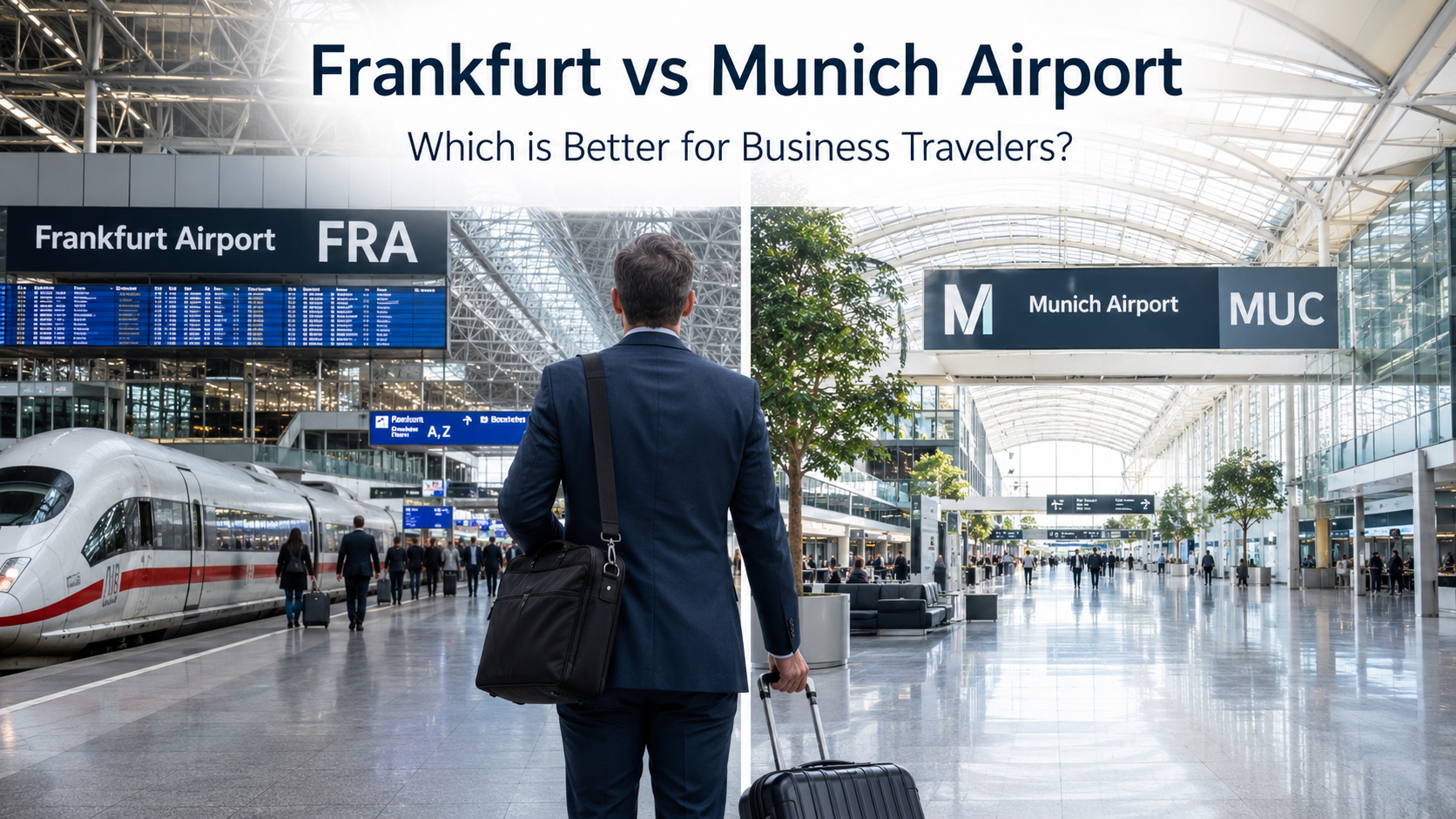
August 05, 2026 By LimoFahr
Germany has two airports that regularly compete for the title of the country's premier international aviation hub. Frankfurt Airport (IATA: FRA) and Munich Airport (IATA: MUC) both serve as major Lufthansa bases, both offer extensive intercontinental...
READ MOREguide2026.png "Oslo Airport (OSL) Guide 2026: Terminals, Lounges and Transport")
July 30, 2026 By LimoFahr
Oslo Airport Gardermoen (IATA: OSL) is Norway's main international airport and one of Scandinavia's busiest aviation hubs. Located approximately 47 kilometers north of Oslo city centre, it serves over 27 million passengers per year and connects the N...
READ MORE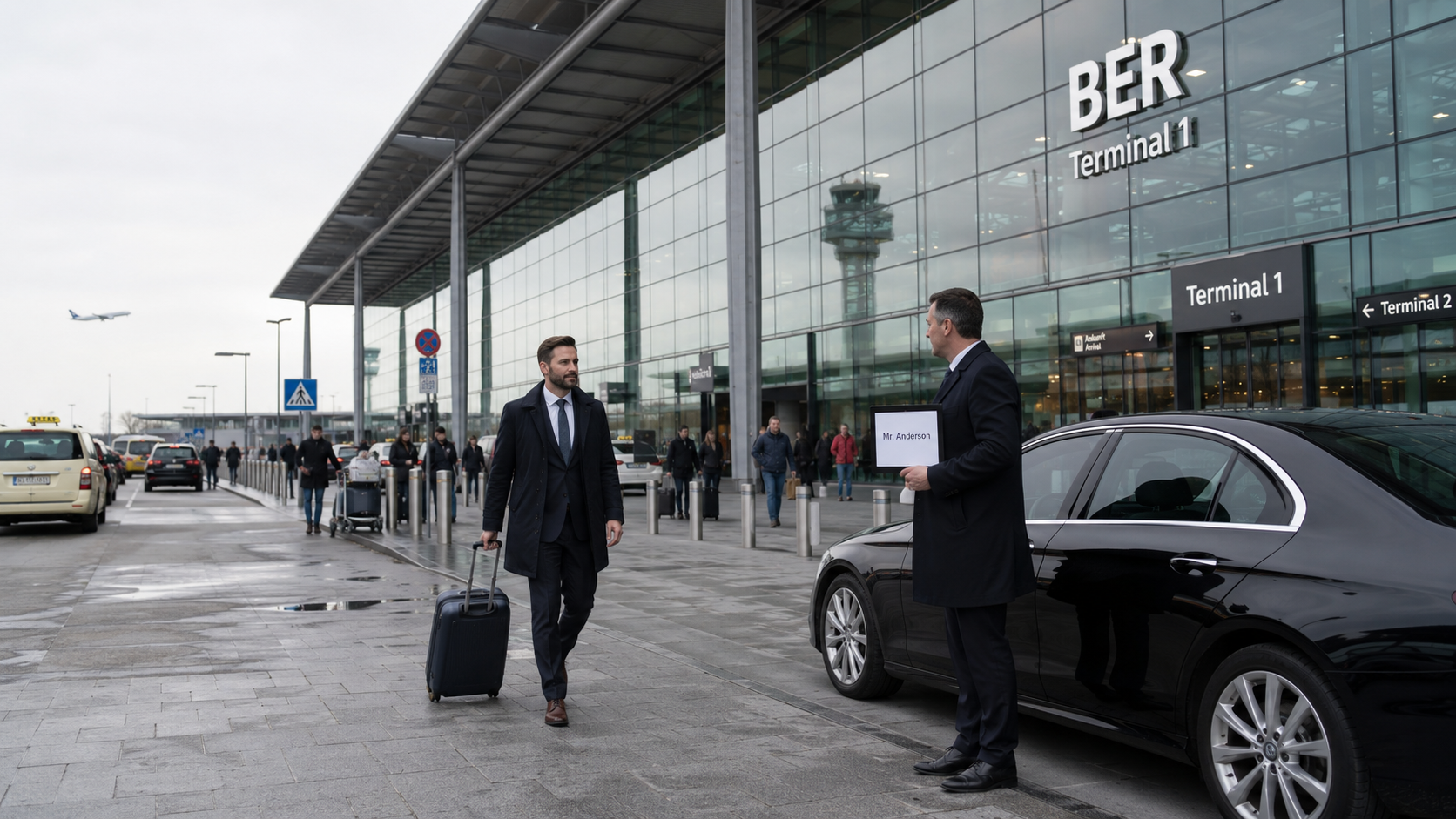
July 16, 2026 By LimoFahr
Berlin Brandenburg Airport (IATA: BER) is the main international gateway into Germany's capital, handling millions of passengers each year across two active terminals. Whether you are flying in for a business meeting, transiting through Berlin, or de...
READ MORE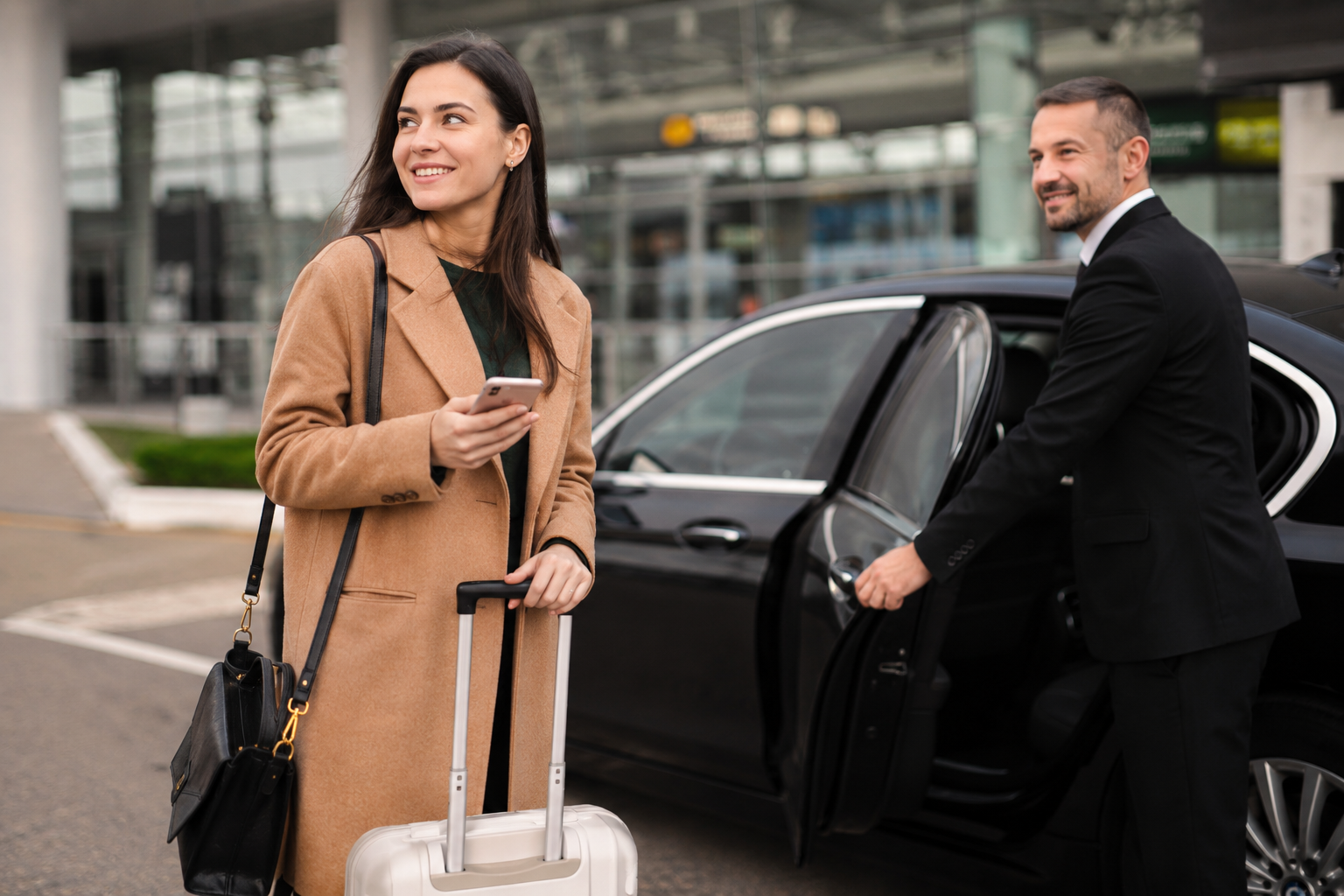
July 03, 2026 By LimoFahr
Traveling alone as a woman takes planning, confidence, and the right choices along the way. One of those choices is how you move between airports, hotels, and destinations, particularly in cities you are visiting for the first time. This guide explai...
READ MORE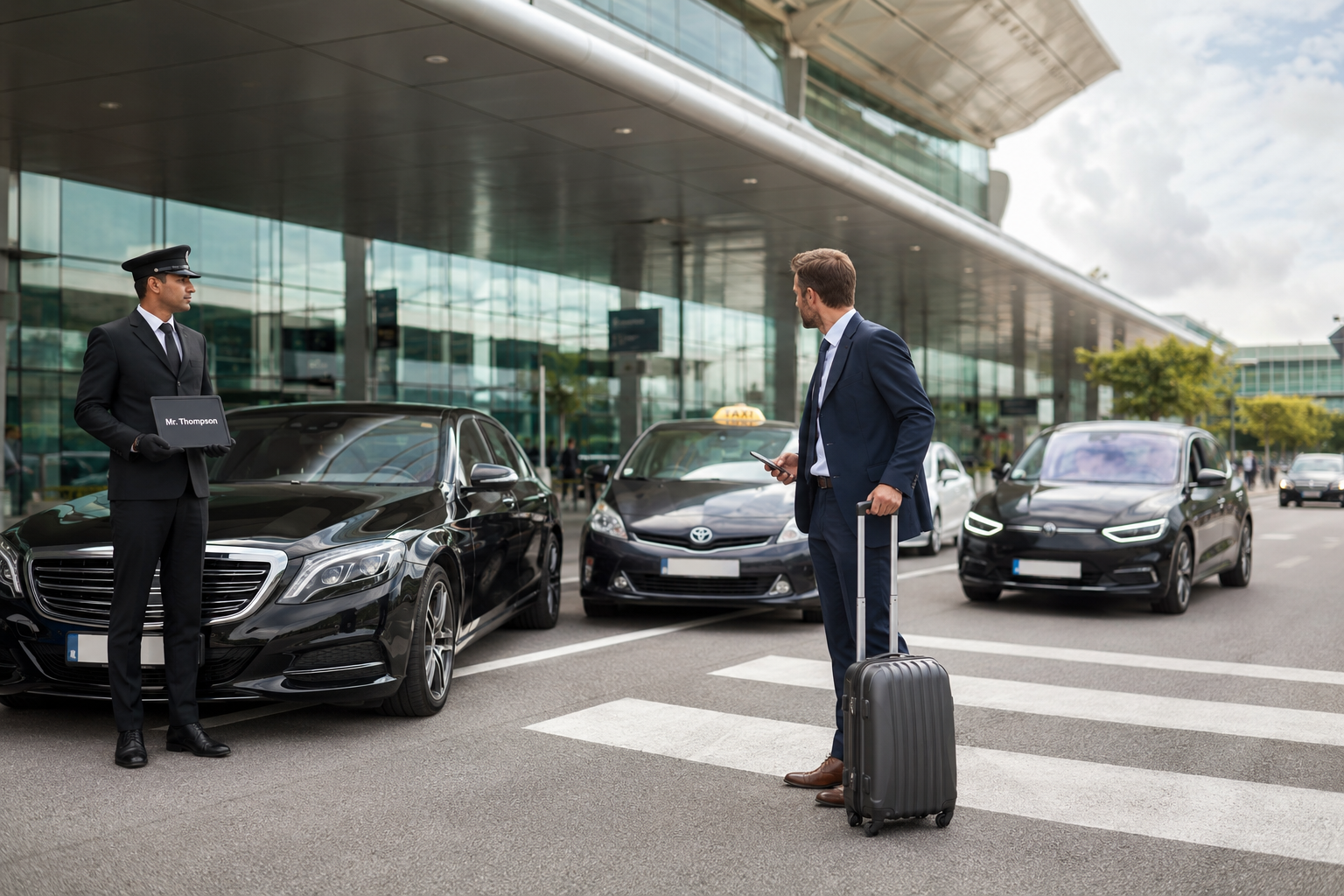
June 22, 2026 By LimoFahr
If you travel regularly for work, you have probably weighed the options: book a chauffeur, open Uber, or find a taxi rank. On the surface, the choice looks simple. But the actual cost of each option for business travel goes well beyond the base fare....
READ MORE
September 22, 2026 By LimoFahr

September 22, 2026 By LimoFahr
August 31, 2026 By LimoFahr
August 24, 2026 By LimoFahr
August 20, 2026 By LimoFahr
Hourly bookings have a few rules that passengers should be aware of. When booking a trip on an hourly basis, it typically starts at the time you meet the driver, within the included waiting time. The trip ends in the area of the city where you indicated your pickup point.
For Economy+ or Business booking class, there is an included waiting time of 15 minutes for pickups outside of the airport, and 45 minutes for Economy+ airport pickups, 60 minutes for Business airport pickups. For First Class, the included waiting time is 30 minutes for pickups outside of the airport and 90 minutes for airport pickups. It's worth noting that hourly bookings are only for a certain amount of time and include specified pickup location, toll, and parking fees are not included in the price.
Saves Time! Travelling to new city for business meetings and you need to get there on time. Scheduling or pre-booking a taxi will benefit you in many cases as taxi will be available at the airport as you reach there, you don’t have to stand in queue and hail for taxis. You don’t know if the taxi is safe or not if you are not pre-booking. You can check our service on our website and go through our fleet and choose taxi as per your choice. You can adjust your trip according to yourself!
An airport transfer is a ride from the airport after your plane lands. The company will ask for your flight number during the booking process so the driver can be there at the time of your plane's arrival. Please note that flights are not tracked for rides to the airport. If you need to be dropped off at a specific terminal, please include it in the destination/drop-off address. What if I provide the incorrect flight number and want to change it? You can change the flight number for free in your account until 3 hours before the scheduled pickup time.
For limousine bookings, the driver will typically be holding a pickup sign with your name and surname on it. You can also request specific text to appear on the sign when making your booking. Simply look for the sign upon arrival at the airport.
For Quality Taxi bookings, the details of your car, along with the driver's contact information will be sent to you via SMS before your pickup.
If you have difficulty finding your driver for either type of booking, you can always call them using the mobile number provided in the SMS sent to you by the company.
Well, these services are designed to get you to your destination quickly and comfortably, without having to worry about the stress of driving yourself or dealing with public transportation. We are there to make all the difference while you can care a little less about all the planning. We bet guaranteed satisfaction along with the best chauffeurs who will guide you throughout the journey and offer an explicit helping hand in order to match the level of comfort you desire. Our motto is to meet all customers needs and create an unforgettable experience for them which they can cherish for life. We believe in creating experiences and thus all our staff is very welcoming and friendly, we offer utmost every kind of help and support in order to comfort you while you travel or stay here. You can always trust us with your travel related concerns and connect with our team if need be and we will sort it out for you..
Searching for your ride…
Comparing prices from our partners. This can take a few seconds.